Rise from depression Review

Rise from depression Review: Bad advice spreads because it is tiny, shiny, and easy to carry. Like a greasy French fry in a paper bag, honestly. Quick to grab. Quick to repeat. “Just think positive.” “Go outside.” “Try harder.” “Stop overthinking.” Somebody in the USA says it on social media, another person turns it into a dramatic quote post, and suddenly it floats around like wisdom when really it is just reheated nonsense in a better jacket.
That’s the annoying part. The darker part is what it does to people.
Because when bad advice fails, people rarely blame the advice first. They blame themselves. They think they are lazy, weak, dramatic, broken, ungrateful, whatever ugly label is lying around in the mental junk drawer. That is why a real Rise from depression Review should not sound like a cartoon salesman or a robot with a coupon code. It should sound a little sharper than that. More awake. Less perfume.
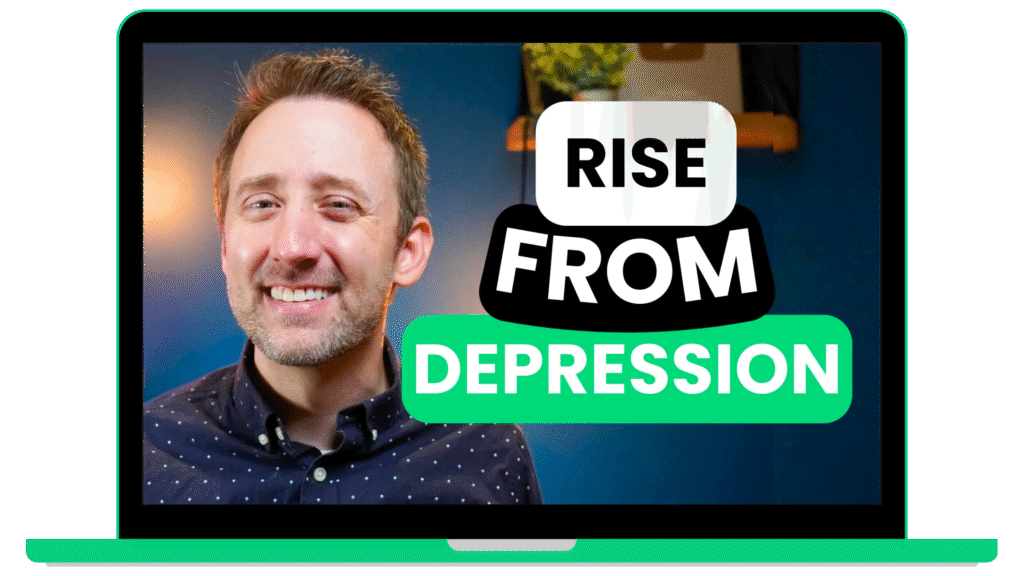
From Nathan Peterson’s official course pages, Rise From Depression is presented as a self-guided online course built around evidence-based strategies, and the public preview materials say it includes sample lessons, worksheets, and mood journals. Nathan Peterson’s counseling site also describes the course as having 13 self-paced videos and worksheets.
So no, this does not look like a random product name floating through the USA internet with no actual home. It appears to be a real course inside a broader OCD and anxiety education platform, with a preview option and a named creator.
Now let’s get to the messy part, the fun part, the part where we drag the worst advice into the parking lot and see what falls out.
| Feature | Details |
|---|---|
| Product Name | Rise From Depression |
| Type | Self-guided online depression course |
| Creator | Nathan Peterson |
| Main Offer | Evidence-based depression strategies in a course format |
| Course Format | 13 self-paced videos + worksheets |
| Access | Online, self-guided |
| Preview Option | Free preview available |
| Main Claims in Reviews | “Highly recommended”, “Reliable”, “No scam”, “100% legit” |
| USA Relevance | Appeals to USA buyers who want flexible, home-based learning |
| Risk Factor | Unrealistic expectations, self-guided effort, not the same as emergency care or full therapy |
| Authenticity Tip | Use the official course pages, not random third-party listings |
1. “Just Think Positive and It Will Go Away”
Oh perfect. Great. Humanity is saved.
This advice is so painfully lazy it almost deserves an award. It survives because it sounds tidy, and people love tidy sentences, especially in the USA where every third person online seems to think pain can be solved by bold text over a sunset. “Choose joy.” “Shift your mindset.” “Good vibes only.” That last one, especially, always makes me want to stare at a wall for a while.
Depression does not care about slogans. It does not pack a suitcase and leave because somebody said “focus on the bright side” with enough confidence. And the official framing of this course does not seem to pretend otherwise. The course pages consistently describe Rise From Depression as teaching evidence-based treatment skills, not generic motivational fluff.
That matters more than people think.
Because a lot of people who are struggling already know their thoughts are harsh, distorted, repetitive, punishing. They know. Awareness is not the magic key. Knowing your windshield is cracked does not repair the glass. Weird metaphor, maybe. Still works.
The truth that actually works better is structure. Not fake optimism. Not emotional spray paint. Something with steps. Lessons. Prompts. Repetition. The official pages around this product point to that sort of structure, which is exactly why Rise from depression Review searches keep happening. People want a system, not a slogan. Or at least they say they do until the system asks them to do actual work.
2. “Wait Until Motivation Comes Back, Then Start”
This one sounds kind. That’s what makes it sneaky.
“Take your time.”
“Start when you’re ready.”
“Don’t force it.”
Nice words. Soft edges. Bad loop.
Because depression often drags motivation out of the room first. So if someone waits until they feel motivated before they begin, they may end up waiting for ages, or forever-ish. The whole thing becomes a circular trap. No motivation, so no action. No action, so life stays flat. Life stays flat, so motivation doesn’t come back. Around and around like a cheap ceiling fan in August.
The public course descriptions do not frame Rise From Depression as passive content. They frame it as a self-guided course with lessons, worksheets, journals, and practical tools. That means participation. Not magic. Not osmosis. You do not absorb progress by placing the checkout page near your forehead and hoping.
This is one of the parts where a serious Rise from depression Review has to be honest, maybe slightly rude about it. Buying help is not the same as using help. Those are different actions. Annoying but true.
The better truth, the less glamorous truth, is that tiny action usually beats waiting for a huge wave of inspiration. A worksheet opened while tired still counts. A lesson watched while grumpy still counts. A mood journal used for three ugly little sentences still counts. The preview materials showing sample lessons and worksheets make that practical angle look real, not invented.
3. “If You Need a Course or Support, You’re Weak”
This advice is stale garbage. It really is.
There’s a certain old-school USA flavor of nonsense that treats silent suffering like a badge of honor. Don’t ask for help. Don’t use tools. Don’t admit anything. Just stand there looking serious and call it strength. It’s theatrical. A little pathetic too, if we’re being honest.
Nathan Peterson’s counseling site says he is not taking new patients and notes that therapy services are limited by state licensing, specifically Texas and Utah, while also pointing people toward courses and other resources on the platform. That context makes the course look less like a random sales gimmick and more like part of a real education-based offering around mental health topics.
That still doesn’t make the course perfect. I’m not saying that. But it does undercut the cheap idea that using a course automatically means weakness or desperation or gullibility. Sometimes it just means a person wants structure and can’t get everything they need from in-person services right away. In the USA, that is not a rare situation. It’s actually painfully common, and not in a poetic way.
The better truth is simple. Use the level of help that fits where you are. Sometimes that’s therapy. Sometimes it’s a self-guided course. Sometimes it’s both. Sometimes it starts with a preview page and a little skepticism, which is fine. Skepticism is healthy. Shame is not.
A decent Rise from depression Review should say that out loud, because too many reviews either worship the product or sneer at anyone who’d consider it. Both reactions are lazy. Very internet. Very tired.
4. “Go Outside, Drink Water, Meditate, Done”
I respect water. Let the record show that.
But the internet’s obsession with handing out hydration and sunlight as if they are a complete emotional operating system is ridiculous. This advice gets thrown around so casually, especially in USA wellness circles, like a jog and a deep breath are going to reorganize somebody’s whole inner life by Thursday afternoon.
Can movement help? Sure.
Can sleep matter? Obviously.
Can mindfulness help? For some people, yes.
But when these are handed out as the entire answer, not part of a bigger method, they become tiny little bumper-sticker solutions for a much bigger mess. They sound helpful because they are simple. Simple is not always enough. Sometimes it barely scratches the paint.
The course pages for Rise From Depression appear to pitch something broader than that. The offer is described as self-guided and evidence-based, with structured lessons, worksheets, and journals rather than one random lifestyle command barked across the room.
That is one reason Rise from depression Review keeps showing up in search intent from USA readers. People are trying to sort out whether this is another glossy wellness blob or something with an actual spine. From the official materials, it looks closer to a structured course than to generic “drink more water” fluff.
The better truth is layered support. Systems. Repetition. Small tools, not just one shiny habit. Less exciting? Yes. More believable? Also yes.
5. “Anything Online Is Either a Miracle or a Scam”
The internet cannot do middle ground anymore. It just can’t.
Everything has to be legendary or criminal. The best thing ever. The biggest fraud ever. Life-changing. Total scam. USA product culture has become one giant courtroom crossed with a used-car ad, and somehow every review writer is either acting like they found salvation or like they’re testifying before Congress.
Here’s the saner version.
The official materials show that Rise From Depression is a real course listed inside Nathan Peterson’s broader OCD and anxiety platform, with a free preview and supporting references across the site. That doesn’t prove everyone will love it, and it definitely doesn’t prove every screaming affiliate review is honest, but it does mean the product looks like a real offering on a real platform.
That should be enough to calm down both extremes a little.
The better questions are boring questions. Who made it. What’s included. Is there a preview. Is the framing measured. Does it promise impossible things. Those questions are not sexy, but they’re useful. Useful beats sexy most days. Not all, but most.
And if a Rise from depression Review article sounds like it was written by somebody yelling “100% legit” while hanging off a discount parachute, maybe do not hand them your full trust.
6. “If It Doesn’t Change Your Life Fast, It’s Useless”
This one feels very now. Very scroll-brain. Very 2026.
People want everything instantly now, especially in the USA where the culture practically sweats urgency. Same-day shipping. Same-week abs. Same-month reinvention. So when a self-guided course does not transform somebody’s whole mental state overnight, some people react like they’ve been personally betrayed by the moon.
That’s not how this works. Usually.
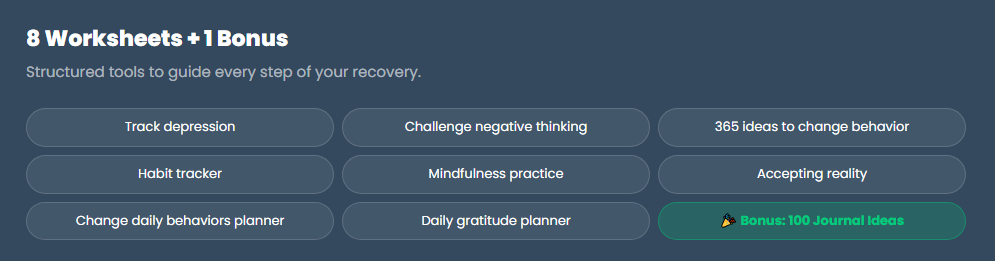
A course with 13 videos, worksheets, and journals is not built for one dramatic movie montage. It’s built for repeated use, repeated exposure, repeated practice. The public pages signal exactly that. This is educational, guided material, not emotional fast food.
The better truth is slower and less glamorous. Progress often starts with smaller changes than people want to brag about. Slightly more clarity. Slightly less heaviness. One extra thing done. One pattern caught earlier. Those are not glamorous wins, but they are still wins. Quiet wins count, even if they don’t look good in a thumbnail image.
A good Rise from depression Review should prepare people for that instead of promising fireworks.
7. “Self-Guided Means Effort-Free”
This is maybe the most common fantasy of all.
People see “online course” and imagine ease. Watch a few videos, download a worksheet, sip coffee, become emotionally renovated. Lovely picture. Not very realistic.
Self-guided means you have to guide the self. That’s literally the hard part. Some nights you will not want to do it. Some mornings you’ll open a worksheet and feel immediately irritated by its existence. Human. Normal. Slightly funny, even.
The official course pages do not hide the self-guided part. They lean into it. The offer is repeatedly described that way, and the preview materials invite people to sample the content before buying. That’s useful because it lets people test the style and pacing instead of blindly hoping it will fit.
The better truth is simple. A self-guided course can be a strong tool for the right person, especially someone in the USA who wants flexibility, privacy, and a structured format. But a tool still has to be used. Bought hope is not the same as applied effort. I know, rude sentence. Still true.
My Blunt Take on Rise from depression Review Searches in the USA
If I strip away the glitter, the fake urgency, the review-page perfume, here’s what remains.
Rise From Depression appears to be a real self-guided course from Nathan Peterson’s platform, with a free preview, structured materials, and a public description that points to evidence-based treatment skills. It looks more grounded than a lot of fluffy junk in this corner of the internet.
That’s the good part.
The less glamorous part is that it still seems to require actual participation. Videos watched. Worksheets used. Journals touched by human hands. Maybe not literal touching if it’s digital, whatever, you get the point. It is not emergency care. It is not one-on-one therapy. It is not some shimmering portal that fixes everything because you typed in your card number with hope in your eyes.
So when you see Rise from depression Review pages that scream “highly recommended” and “no scam” and “100% legit,” take a breath. Some may be sincere. Some are clearly selling certainty more than clarity. The official offer itself matters more than the loud adjectives wrapped around it.
And the official offer looks, at minimum, coherent. That’s worth something. In this internet climate, honestly, that’s worth a lot.
Filter out the nonsense.
Ignore the fake tough-love merchants. Ignore the wellness parrots. Ignore the people who reduce depression to attitude, or hydration, or “grindset,” whatever that means this week. Ignore the reviews that sound like wedding vows to a checkout page. Ignore the ones that dismiss everything online without even reading it properly.
Most bad advice spreads because it is simple, not because it is true.
The better stuff is usually slower. More structured. More repetitive. A little dull sometimes, yes. But dull can still help. Dull can save you from wasting time on glittery nonsense, and if you are already tired, that matters more than people admit.
So if you came here looking for a Rise from depression Review, here’s the plain takeaway: the official product looks like a legitimate self-guided course with preview access, structured lessons, and supporting materials on a real platform. That does not make it magic. It just makes it more believable than half the sparkly rubbish floating around online.
And believable, weirdly enough, is often where better decisions begin.
5 FAQs
1. Is Rise From Depression a real product or just another scammy course?
From the official pages, it appears to be a real course on Nathan Peterson’s OCD and anxiety platform, with a free preview and course references across the site. That does not guarantee it will fit everyone, but it does make it look like a legitimate offering rather than a random ghost product.
2. What is actually included in the course?
The public descriptions point to 13 self-paced videos, worksheets, mood journals, and sample lessons available through the preview. The main framing is a self-guided, evidence-based depression course.
3. Is there a free preview before paying?
Yes. The official course pages and preview materials say there is a free preview or free trial option, with sample content and resources available before purchase.
4. Who is this likely best for in the USA?
Based on the public framing, it seems best suited to USA buyers who want flexible, home-based, self-guided learning and are willing to use lessons and worksheets consistently. Someone needing emergency or high-touch clinical care may need more direct support than a course can provide.
5. Why do so many Rise from depression Review pages sound overhyped?
Because many review pages are built to sell, not just explain. That’s why you keep seeing loud phrases like “highly recommended,” “reliable,” and “100% legit.” Some may be genuine. Some are just dressed-up sales language trying way too hard.
Table of Contents
7 Worst Truths Hiding Inside Rise from depression Reviews USA Readers Should Not Ignore