Rise from depression Reviews

Rise from depression Reviews: Bad advice spreads because it’s easy to carry around. Light, cheap, flashy. Like one of those plastic bags floating through a hot Walmart parking lot in the USA, somehow dramatic for no reason. “Just think positive.” “Get over it.” “Try harder.” “Go for a walk and drink some water.” Boom. Said with confidence, passed around like wisdom, and suddenly people start treating recycled nonsense like it’s sacred truth.
That’s the ugly part.
The other ugly part is what happens next. People who are already tired, already heavy, already mentally bruised start blaming themselves because the bad advice didn’t work. They think maybe they’re weak, maybe lazy, maybe broken in some special expensive way. That’s how junk advice holds people back. It doesn’t just fail. It leaves fingerprints.
So this piece is for people searching Rise from depression Reviews in the USA and trying to figure out what’s real, what’s hype, what’s affiliate glitter, and what’s just another loud internet tantrum with nice formatting.
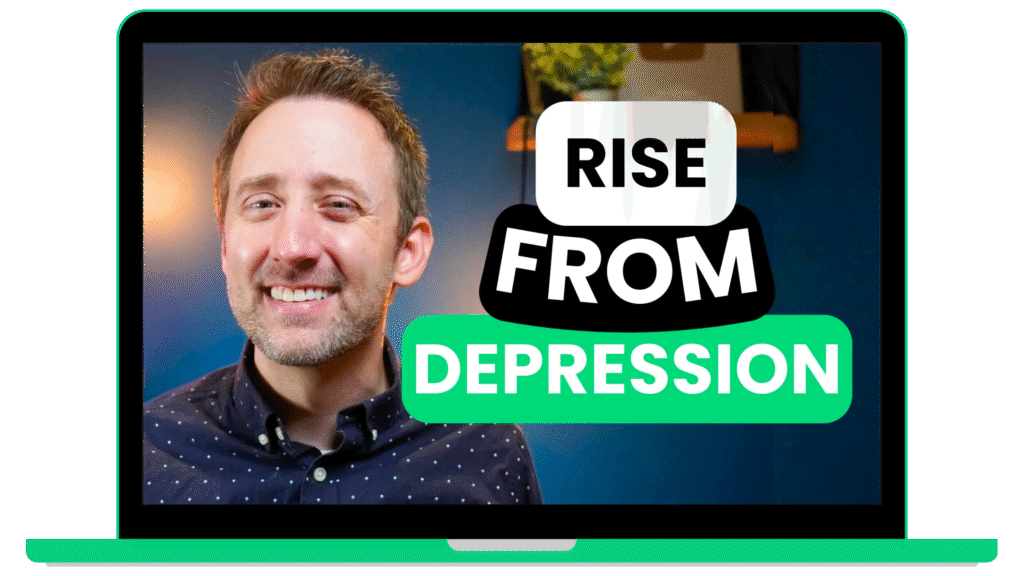
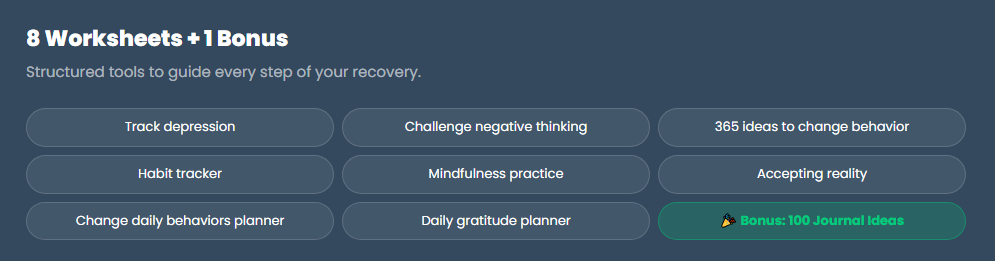
From the official materials, Rise From Depression is presented as a self-guided online course from Nathan Peterson’s OCD & Anxiety platform. The site describes it as a depression course using evidence-based strategies, and a separate preview page says it includes sample lessons, worksheets, mood journals, and is taught by a licensed therapist. Nathan Peterson’s counseling site also references the course and describes it as containing 13 engaging self-paced videos and worksheets aimed at reducing depressive symptoms.
Now, does that mean every review saying “I love this product, highly recommended, reliable, no scam, 100% legit” should be trusted like gospel? No. Absolutely not. People oversell. Affiliates oversell harder. The internet, especially in the USA, has a weird allergy to moderation. But the offer itself does look like a real self-guided course with a named creator, a visible platform, and a free preview.
And that’s where this gets interesting.
| Feature | Details |
|---|---|
| Product Name | Rise From Depression |
| Type | Self-guided online depression course |
| Creator | Nathan Peterson |
| Creator Credentials | Licensed clinician / LCSW-based brand positioning |
| Core Focus | Evidence-based depression strategies |
| Format | 13 self-paced videos + worksheets |
| Access Style | Self-guided, online |
| Free Access Option | Free preview available |
| Main Claims in Reviews | “Highly recommended”, “Reliable”, “No scam”, “100% legit” |
| USA Relevance | Useful for USA buyers wanting flexible, home-based learning |
| Risk Factor | Unrealistic expectations, self-guided effort, not equal to emergency care or full therapy |
| Authenticity Tip | Buy from the official course site, not random copycat listings |
1. Terrible Advice: “Just Think Positive and It’ll Go Away”
Ah yes, the national anthem of people who have never had their own brain pin them to the floor.
This advice survives because it sounds clean. Efficient. Polished. It fits on a coffee mug. It works great in an Instagram caption written by someone who probably cried once during a traffic jam and now calls themselves a resilience coach. In the USA, this line gets repeated so often it’s almost background noise. Like leaf blowers. Or campaign ads. Or someone on LinkedIn saying they turned pain into productivity.
But depression is not a stained shirt. You don’t just scrub at it with optimism and call it fixed.
A lot of people already know their thoughts are harsh, repetitive, warped, ugly. They know. That is not the breakthrough. The problem is that awareness doesn’t magically become control. Knowing a stove is hot doesn’t stop the burn. I don’t know why kitchen metaphors keep showing up in my head, but there it is.
The official course positioning matters here, because it does not seem to be marketed as “just think happier thoughts.” The site says the course uses evidence-based strategies, and the preview page points to structured lessons, worksheets, and mood journals rather than vague positivity theatre.
Why this advice is bad
Because it turns a serious problem into a personality flaw. It says, without saying it, that if you’re still struggling then maybe you didn’t smile hard enough. Gross.
What actually makes more sense
Structured thought work, guided learning, and repeated tools. Not fake sunshine. Not emotional spray paint. Something steadier than that. That’s one reason Rise from depression Reviews keep getting searched in the USA. People are tired of slogans. They want method. Or at least something that looks like method and not glitter in a lab coat.
2. Terrible Advice: “Wait for Motivation to Return, Then Start”
This one sounds kind. That’s what makes it dangerous.
“Take your time.”
“Start when you’re ready.”
“Don’t force it.”
Nice words. Soft edges. Very comforting. Also capable of trapping someone for months.
Because depression often messes with motivation first. So if a person waits until they feel ready, they may end up waiting forever, or close enough to forever that it starts smelling the same. This is one of those awful loops that looks harmless from the outside. No motivation, so no action. No action, so nothing changes. Nothing changes, so motivation doesn’t come back. Round and round like a grocery cart with one busted wheel scraping across concrete in some overheated USA parking lot.
The official materials for this course don’t frame it as a passive experience. The counseling site says it includes 13 self-paced videos and worksheets to guide the user. The main platform describes it as a self-guided course to help people feel like themselves again. That’s active language, not “sit quietly until inspiration descends like a patriotic eagle.”
Why this advice is bad
Because it makes recovery dependent on a feeling that may be absent precisely because the person is depressed. That’s like waiting for a flat tire to inflate itself out of self-respect.
What actually makes more sense
Small action first. Tiny, annoying, unimpressive action. The kind that doesn’t look cinematic at all. A lesson watched. A worksheet opened. A pattern noticed. A journal page used. The free preview page even offers sample modules, worksheets, and mood journals, which suggests the course is trying to move people into doing, not just hoping.
This is where a real Rise from depression Reviews article should be honest: if you want a course that requires literally nothing from you, that fantasy is probably going to end badly.
3. Terrible Advice: “If You Need Help, You’re Weak”
This advice is stale garbage dressed up as toughness.
There’s a certain flavor of USA thinking that worships silent suffering. Don’t ask for help. Don’t use support. Don’t say you’re drowning. Just tighten your jaw, buy a water bottle, and call it grit. It’s nonsense. A whole little religion of nonsense.
And yet people still believe it.
Nathan Peterson’s counseling site says he is not taking new patients and notes that therapy clients are limited by state licensing, while also pointing visitors toward online courses in the meantime, including Rise From Depression. That’s actually a very normal, useful bit of context. It says: there are limits, here’s another option. Not magic. Not bravado. Just an option.
That kind of framing is refreshing because fake products usually pretend they are the only answer you will ever need. This one, at least from the pages I checked, is presented more like a structured educational tool on a broader mental health platform, with preview access and self-guided material.
Why this advice is bad
Because shame is not treatment. Shame just adds another brick to the backpack.
What actually makes more sense
Use the kind of help that matches where you are. Sometimes that’s therapy. Sometimes it’s a self-guided course as a starting point. Sometimes it’s both. Sometimes the first win is just admitting you need more than quotes and caffeine. That is not weakness. That is plain reality. Which, strangely, still scares people more than fake strength does.
A lot of Rise from depression Reviews aimed at USA buyers forget this. They either overhype the course like it’s a miracle, or they attack the very idea of guided support. Both miss the point.
4. Terrible Advice: “Go Outside, Drink Water, Meditate, Done”
I’m not anti-water. Let me just say that clearly before hydration enthusiasts start forming a committee.
Yes, sunlight can help. Yes, movement can help. Yes, mindfulness can help. But the internet has turned these ideas into little bumper stickers and started handing them out as if they solve the full problem by themselves. That’s where it gets absurd. It becomes this weird minimalist gospel: hydrate, stretch, touch grass, be healed. Like depression is a software bug fixed by one brisk walk in Colorado.
No.
The course here appears to be broader than that. The main site presents it as a self-guided depression course built around evidence-based strategies, and the preview page offers worksheets, mood journals, and sample lessons as part of that structured approach. The counseling site also frames it as “multiple therapy sessions worth of information,” which is at least a specific kind of pitch, not just generic wellness fluff.
Why this advice is bad
Because it oversimplifies. Then, when the oversimplified advice doesn’t work, the person starts thinking they failed. Maybe they didn’t fail. Maybe the advice was just thin as tissue paper.
What actually makes more sense
A system. Or at least a system-shaped attempt. Videos, exercises, tracking, repetition. That’s one reason Rise from depression Reviews keeps showing up in USA search intent. Buyers want to know whether this is a random motivational blob or a real structure. From the official pages, it looks much closer to structure than to slogan soup.
5. Terrible Advice: “Anything Sold Online Is Either a Miracle or a Scam”
This one annoys me because it wipes out normal judgment completely.
The internet cannot do middle ground anymore. Everything has to be legendary or evil. Best thing ever. Worst thing ever. Life-changing. Fraudulent. And USA review culture is especially chaotic about this, because now every product gets judged like it’s on trial in a made-for-streaming documentary.
For Rise from depression Reviews, the better question is not “Is it perfect?” or “Is it fake?” The better question is whether the offer is clearly defined and grounded in what it actually claims.
Here’s what’s visible from the official pages: Rise From Depression is listed on Nathan Peterson’s OCD & Anxiety platform as a self-guided course for depression; a free preview page exists; and the counseling site describes it as 13 self-paced videos plus worksheets with evidence-based treatment strategies. Those are concrete details, not mystical fog.
Why this advice is bad
Because it encourages lazy thinking. If you assume every online course is either divine or criminal, you stop asking practical questions.
What actually makes more sense
Ask normal questions:
Who made it?
What’s included?
Is there a preview?
Does it look like a real platform?
Does the tone sound measured or insane?
On those points, this product looks more solid than a lot of digital junk. Not guaranteed for everybody, no. But solid-looking, yes. And yes, that’s a less exciting sentence than “100% legit life upgrade unlocked.” Too bad. It’s closer to the truth.
The Real Complaints Are Usually Less Dramatic Than Review Writers Pretend
Here’s where things get funny. Or depressing. Maybe both.
Most real complaints about a self-guided course like this are not going to be cinematic. They’re going to be ordinary. Things like:
“It still required effort.”
“I wanted faster change.”
“I’m not good with self-paced material.”
“I needed more support than videos and worksheets.”
Those are product-fit complaints, not necessarily scandal. And product fit matters a lot with something like this.
The counseling site’s description alone makes it clear this is not supposed to be passive entertainment. It literally talks about videos and worksheets to guide the process. The free preview page also emphasizes sample modules, worksheets, and mood journals. That points to participation, not magic.
So when you read Rise from depression Reviews, especially USA-targeted ones full of giant promises, keep that in mind. A person can sincerely like the course and still not have it work the same way for somebody else. Human beings are not toaster ovens. Same input, different outcome. Messy, but true.
My Blunt Take on Rise from depression Reviews for USA Buyers
If I strip away all the marketing perfume, here’s where I land.
Rise From Depression appears to be a real self-guided online course, tied to Nathan Peterson’s broader mental health platform, with a free preview, structured lessons, and worksheets. The public pages present it as evidence-based and self-paced, not as a miracle replacement for every kind of care.
That’s the good part.
The less shiny part is that it is still a self-guided course. That means effort. Follow-through. Repetition. Probably a little resistance too, because humans are excellent at buying hope and then resenting homework. I say that with affection. Mostly.
So if a review tells you this thing is effortless, instant, foolproof, or basically a holy object with a checkout button, ignore it. If another review says every online course is automatically fake because it exists on the internet, ignore that too.
A smarter Rise from depression Reviews mindset is simpler:
Does this look real?
Yes.
Does it look structured?
Also yes.
Does that mean it will be the right fit for every USA buyer?
No, obviously not.
And that’s okay. “Not for everyone” is often a sign of honesty, not weakness.
Filter out the junk.
Please.
Ignore the people who reduce depression to attitude. Ignore the fake tough-love merchants. Ignore the wellness parrots handing out sunlight and hydration as if they’ve cracked the code of the human soul. Ignore the review writers who sound like they’re either auditioning for a sales conference or filing charges in a courtroom drama.
Most bad advice spreads because it is short, loud, and flattering to the person saying it.
The better stuff is usually slower. Less sparkly. More repetitive. More grounded. Maybe a little boring, and that’s fine. Boring can still help. Boring can even save you from wasting months on nonsense, which is more than I can say for half the internet.
So if you came here looking for Rise from depression Reviews, here’s the clean takeaway: the official product looks like a legitimate self-guided course with preview access, structured videos, worksheets, and a named creator. That does not make it magic. It just makes it more believable than most of the glitter-coated rubbish floating around online.
And believable, weirdly enough, is often where better decisions start.
5 FAQs
1. Is Rise From Depression a real product or a scam?
From the official pages, it appears to be a real self-guided course on Nathan Peterson’s OCD & Anxiety platform, with a free preview and a counseling site reference describing 13 self-paced videos and worksheets. That doesn’t guarantee perfect results, but it does make it look like a real offer.
2. What do most Rise from depression Reviews focus on?
Usually the same few things: whether the course feels practical, whether it looks trustworthy, whether the self-guided format is enough, and whether buyers think it matches what they need. In other words, usefulness, trust, and fit.
3. Is there a free preview before buying?
Yes. The preview page says there are sample video lessons, worksheets, and mood journals available with no credit card needed. That’s actually one of the better signs here, because preview access lets people inspect the vibe before spending money.
4. Who is this course likely best for in the USA?
Probably USA buyers who want flexible, home-based, self-paced learning and are willing to work through videos and worksheets on their own. People wanting hands-on clinical care may need something more direct.
5. Why do some Rise from depression Reviews sound so overhyped?
Because review pages, especially affiliate ones, often use exaggerated lines like “highly recommended,” “no scam,” and “100% legit” to push clicks. Some may be sincere, but many are trying to sell certainty more than clarity.
Table of Contents
5 Worst SonusZen Review and Complaints 2026 Takes in the USA — And Why They’re So Painfully Dumb